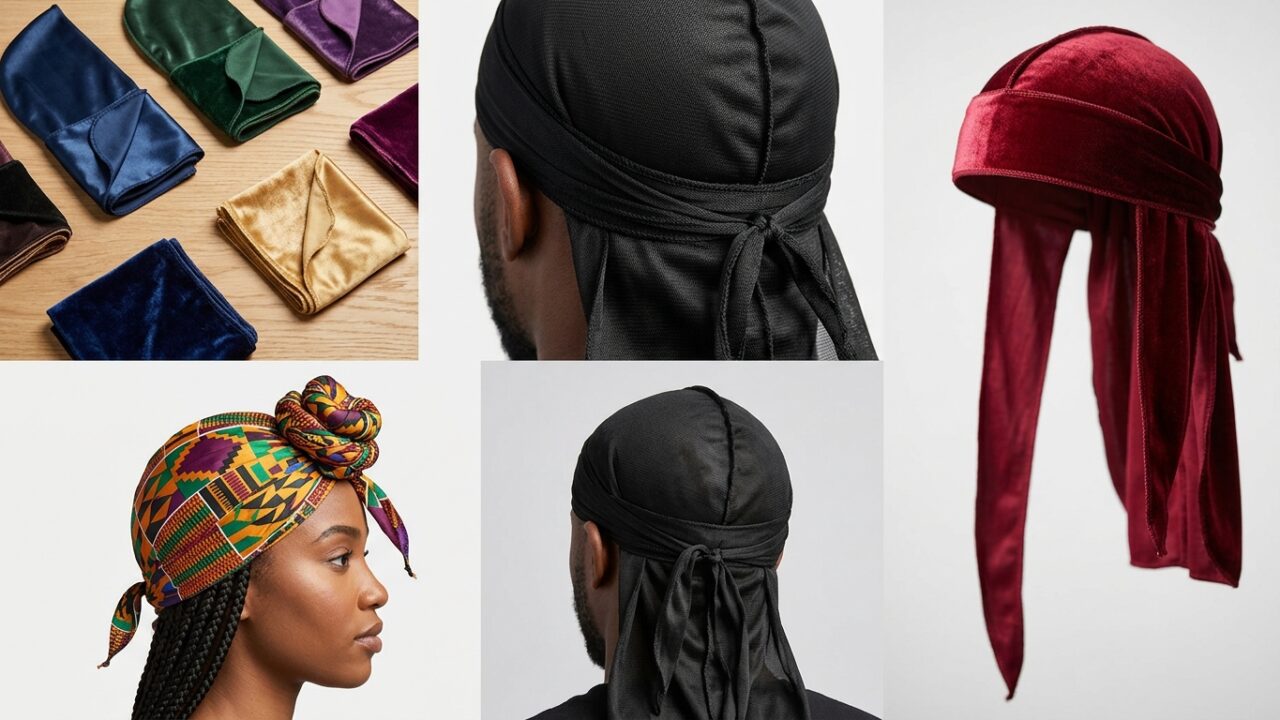
The history of the durag: where it comes from and who invented it
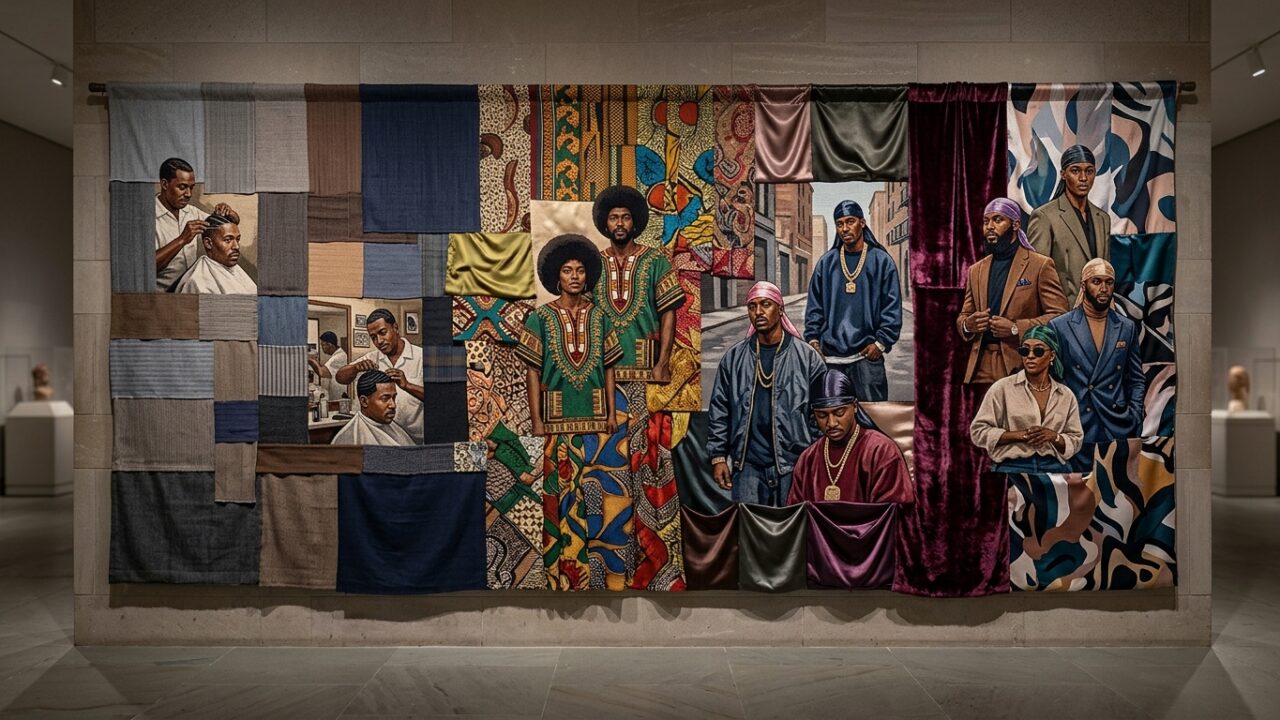
The durag has no single inventor and no exact birth date. It grew out of centuries of head wrapping, got a name in the 1960s and a commercial product in 1979, and reached the cover of British Vogue in 2020. This guide covers what is documented, what is only claimed, and what people still argue about.
- Who invented the durag? Nobody knows for sure. A company, So Many Waves, says its founder sold the first “tie-down” in 1979.
- When was the word first used? Merriam-Webster dates “do-rag” to 1968.
- Why do people wear one? To hold hair in place, protect a style and set waves.
- Can anyone wear one? The short answer is yes, but the history matters to a lot of people. More on that at the end.
Where does durag come from?
Wrapping hair in cloth is old, and it doesn’t belong to one place. Women across West and Southern Africa have wrapped their heads for centuries, and the fabric, height and knot could say something about a woman’s wealth or marital status. Names like gele and duku come from that tradition.
In the Americas that tradition ran into slavery. Enslaved women covered their hair for work and to protect it, and in some places the law got involved. The best-known case is the tignon law in New Orleans. On June 2, 1786, the Spanish governor Esteban Miro issued a decree that included an order for women of color to cover their hair with a scarf. That tied the headwrap to slavery and set these women apart from white women. The historian Virginia Gould argues the real aim was to control free women of color whose dress and independence unsettled the social order. Some historians also point out that there’s little evidence the rule was strictly enforced, and that women reworked the tignon with rich fabrics and elaborate knots until it became a mark of distinction.
The durag is a different object. Still, many writers see it as part of the same line: a head covering that started as a restriction or a chore and got turned into something worn with pride. That’s a fair way to look at it, with one warning. A straight line from the tignon to the modern durag is a story people have told more than something anyone has proven.
Where does the word durag come from?
“Do-rag” appears in print before “durag” does. According to a 2018 New York Times piece by Sandra E. Garcia, Merriam-Webster dates the earliest use of do-rag to 1968. You’ll see it spelled durag, du-rag, do-rag and doo-rag. The Times uses durag, which is the spelling used here.
Who invented durag?
The most specific claim in durag history comes from a company. So Many Waves says its founder, William J. Dowdy, came up with a cloth to hold brushed hair in place and began selling it in 1979 under the name “tie-down.” His son Darren Dowdy, now the company’s president, told the Times the story in 2018. It’s a company telling its own history, so treat it as a claim and not a settled fact. Allure, in its own history of the durag, noted that there’s no single origin and that Dowdy is mostly credited with popularizing it.
Why do people wear durags?
For decades the durag has been the tool behind waves. Brush the hair into a pattern, then press it flat under the cloth. That routine built a whole culture around it. At some colleges, wave checks are social events where people unwrap their durags and show what’s underneath, as Allure described.
In 2018 a student group at George Mason University held a National Durag Week, inspired by similar events at historically Black colleges. The week opened with a talk on durag history. Several students there said their parents had told them not to wear durags, bonnets or scarves in public. The writer Vann R. Newkirk II started a Durag History Week on Twitter for the same reason, to celebrate the people and moments that belong to the cloth.
Why has durag been controversial?
Allure wrote that mainstream society tended to read the durag as criminal or crude, and writers keep coming back to how little that has to do with what the cloth is for. It’s a hair product. For a lot of people it was also a reason to be judged at school, at work or on the street.
Then the fashion world caught up. In May 2020 Rihanna became the first woman to appear on the cover of British Vogue in a durag, according to the Guardian. The one she wore was made by the milliner Stephen Jones. British Vogue’s editor, Edward Enninful, wrote that he never imagined he’d see a durag on a Vogue cover, and he credited the idea to Rihanna herself.
Who can wear a durag? Can white people wear one?
Today durags are sold everywhere, from barbershops to luxury brands. That’s where the argument comes in. Some Black people feel that when someone outside the culture wears a durag as a costume or a trend, with no thought for where it comes from, it’s disrespectful, especially when Black people have been judged for wearing one. Others say a piece of cloth that protects hair should be open to anyone who needs it.
The argument doesn’t have a neat answer. The practical one is that anyone can wear a durag for hair care, and it’s worth knowing the history above and not treating it as a joke or a costume. There’s more on this in the guide to who can wear a durag.
Common questions about the durag
What does durag mean?
A durag is a cloth cap with two ties, worn to hold hair in place, protect a style and set waves. Most sources read the “do” in do-rag as short for hairdo. One other explanation spells it dew-rag, as in sweat.
Is a durag the same as a do-rag?
Yes. Durag, du-rag, do-rag and doo-rag are spellings of the same thing.
Is a durag the same as a head wrap?
They’re related, not identical. A head wrap is a long piece of cloth tied around the head, while a durag is a sewn cap with tails, made to press hair flat. Many writers treat the durag as part of the wider head wrap tradition.
Who started Durag History Week?
The writer Vann R. Newkirk II began it on Twitter, according to Allure.