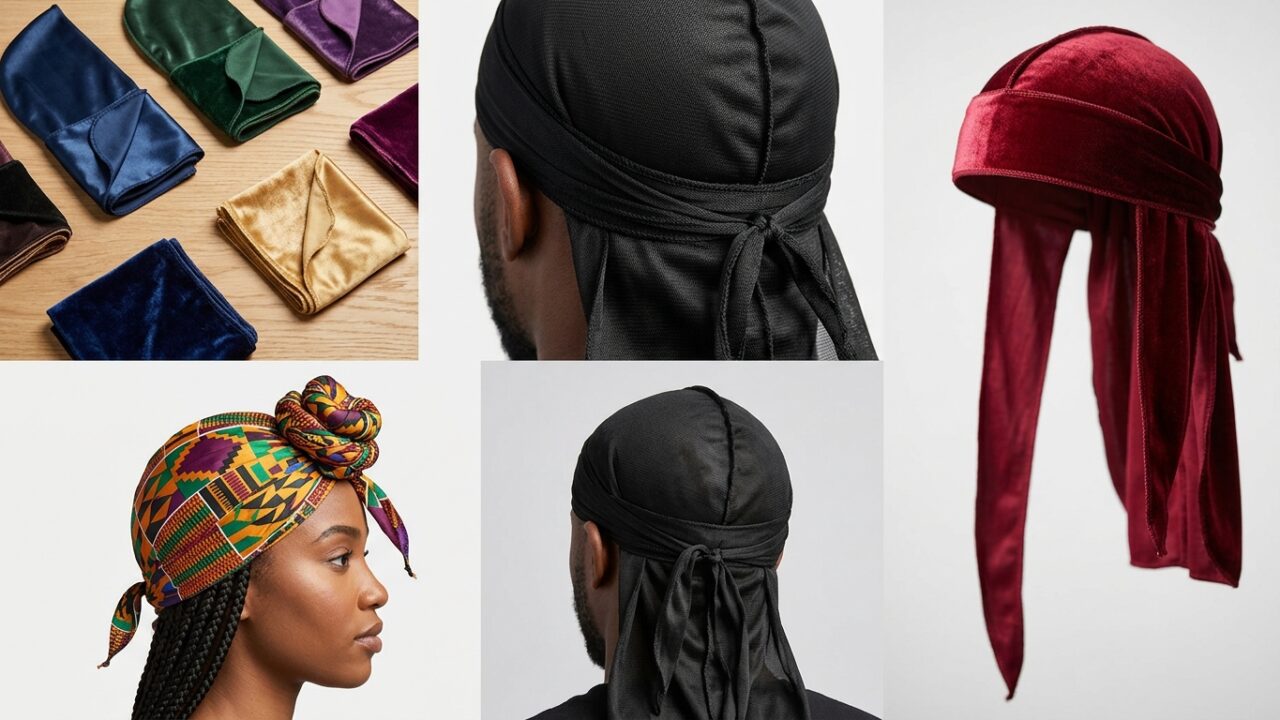
Satin durag guide: what it is and how it compares with silk and velvet

A satin durag is a durag cut from satin fabric, which is smooth and glossy on the outside and slides easily over hair. The word satin describes how the fabric is woven, not what it’s made of, so a satin durag can be polyester or real silk. Most are polyester. For waves it’s a good everyday choice, though it grips less than velvet.
What is a satin durag?
A satin durag has the usual cap and two tails, made from satin. Britannica defines satin as any fabric made with the satin weave, one of the three basic textile weaves. In that weave, long threads float across the surface instead of crossing over and under every other thread, which gives the front its shine and leaves the back dull. Merriam-Webster describes the result as a smooth-faced fabric.
That smooth surface is the whole appeal. Hair slides across it instead of catching.
Is a satin durag the same as a silk durag?
Not necessarily. Silk is a natural fiber that comes from silkworms. Satin is a weave. Silk can be woven into satin, and so can polyester. When a listing says silk durag, it might be real silk or it might be polyester satin sold under a silky name. A silky durag usually means the second kind, a synthetic fabric that feels like silk.
The fiber content on the label tells you which one you’re buying. If it says polyester, it’s polyester. If it says 100% silk or mulberry silk, it’s real.
| Polyester satin | Silk satin | Velvet | |
|---|---|---|---|
| Feel | Slick and glossy | The softest, with a deep sheen | Plush |
| Grip on hair | Low | Low | Higher |
| Price | Usually the lowest | Usually the highest | Varies |
| Care | Usually the easiest | Needs gentle handling | Wash gently and check the label |
What are satin durags good for?
Everyday wear and protection. The American Academy of Dermatology says satin or silk bonnets and pillowcases may reduce friction and help preserve a hairstyle on curly hair. A satin durag works on the same idea: smooth fabric against your hair means less rubbing. That makes it a reasonable pick for protecting braids and twists, and for keeping brushed waves in place.
Are satin durags good for waves?
Yes, with one catch. Satin presses your hair, but it slides, so it holds less firmly than velvet. Tie it snug and brush properly and plenty of people get waves with satin. If yours keeps creeping up, try a longer tail for a firmer wrap, or switch to velvet. The guide on how to tie a durag shows how snug is snug enough.
The downsides of satin
The slipperiness is the same property that makes it gentle on hair, so you take the good with the bad. Satin weave also tends to snag more easily than plain weave fabrics, so keep it away from rough hands, jewelry and anything with hook-and-loop fasteners. And polyester satin is generally more durable than silk satin, which means silk isn’t the smarter buy if you’re hard on your gear.
How to choose a satin durag
Read the fiber label first, so you know whether you’re getting polyester or silk. Then check the fit. The cap should reach from your hairline to the base of your skull without stretching to its limit. Choose long tails if you want a firmer wrap and short tails if you want something quick. Look at the stitching where the tails join the cap, since that seam takes the most pull.
How to wash a satin durag
Check the label first. Polyester satin can usually be hand washed in lukewarm water with mild soap and left to air dry. Real silk is more delicate. Skip bleach, and let it dry away from direct heat.
Common questions
What is the difference between satin and sateen?
Sateen is a related weave, usually made in cotton. It’s typically softer and less shiny than satin, and you see it more often in bed sheets than in durags.
Can you sleep in a satin durag?
You can. Smooth fabric is easier on hair than cotton, but the knot ends up under your head, so a bonnet is usually more comfortable for sleeping.